It is that time of year again when many in our church will celebrate Thanksgiving. Look up what the holiday is about and you will probably read something like this:
“Thanksgiving Day: annual national holiday in the United States and Canada celebrating the harvest and other blessings of the past year. Americans generally believe that their Thanksgiving is modeled on a 1621 harvest feast shared by the English colonists (Pilgrims) of Plymouth and the Wampanoag people”.
Much to harvest and much to be thankful for. But, when the dinner is done and the guests are gone, is there still much thanksgiving? What if there isn’t a bountiful harvest in your life right now to be thankful for?
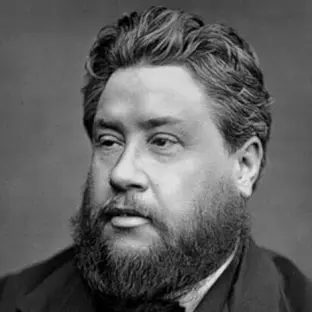
A favourite minister of mine to read is Charles Spurgeon. Influential well beyond his death in 1892 his sermons, letters, and lectures continue to inspire and educate generation after generation of prospective preachers and teachers. He wrote about thanksgiving many, many times to the point where, it seems, for him it was not an event, celebrated once a year, but an integral part of his lifestyle. He referred to it as thanks-living:
“Then, brethren, we ought to be always thanks-living. I think that is a better thing than thanksgiving — thanks-living. How is this to be done? By a general cheerfulness of manner, by an obedience to the command of him by whose mercy we live, by a perpetual, constant, delighting ourselves in the Lord, and submission of our desires to his mind. Oh! I wish that our whole life might be a psalm; that every day might be a stanza of a mighty poem; that so from the day of our spiritual birth until we enter heaven we might be pouring forth sacred minstrelsy in every thought, and word, and action of our lives. Let us give him thankfulness and thanks-living”.
Spurgeon’s thanks-living wasn’t rooted in any temporal or temporary circumstance or success (not that there is anything wrong with celebrating those). Instead, his thanks was rooted in who God was: character and actions and promises. So, no matter what was happening to him, for him, or around him, Spurgeon could still have a deeply thankful attitude and the heart to thank God. He wrote this on Psalm 107.1:
“Give thanks to the LORD, for he is good,
and his loyal love endures.”
“It is all we can give him, and the least we can give; therefore, let us diligently render to him our thanksgiving…Compared with him there is none good, no, no one: but he is essentially, perpetually, superlatively, infinitely good. We are the perpetual partakers of his goodness, and therefore ought above all his creatures to magnify his name. Our praise should be increased by the fact that the divine goodness is not a transient thing, but in the attribute of mercy abides forever the same”.
‘Divine goodness is not a transient thing‘ is cause for thanks. No matter what is happening to us, for us, or around us on the fourth Thursday of November we always have cause to thank God. Yes, celebrate the particular blessings and relationships and harvests of the year gone by, but, at the same time, recognise that each and every good and positive thing in your life is from God, in whom is no changing (James 1.17). Because God is the same yesterday, today, and tomorrow (Hebrews 13.8) we always have cause for thanks-living.
Thanksgiving, the day, is a wonderful tradition that enriches many relationships and communities (ours, for example). Working to continue this year-round means it becomes more than a tradition. It becomes, as Spurgeon wrote, a way of living made possible by the love of God shown to us in Christ 1. So, what if there isn’t a bountiful harvest in your life right now to be thankful for?
I think that is a better thing than thanksgiving — thanks-living.
1 – Geoff Chang, Micah Powell – https://www.spurgeon.org/resource-library/blog-entries/celebrating-thanksgiving-by-thanks-living/
 James Travis
One thought on “Thanksgiving Living”